Complete Sermon Details
Message Overview
This Friday Service from Praise God Ministry in Kuwait opens with congregational worship and scripture readings from Psalm 86, emphasizing God's unique power, mercy, and responsiveness to those in distress. The congregation joins in singing Telugu praise songs that affirm God's ability to make the impossible possible.
Following worship, members of the congregation step forward to share personal testimonies. Testimonies include thanksgiving for job provisions after times of unemployment and hardship, miraculous physical healing from persistent ailments through prayer, financial restoration of lost funds, and answers to corporate prayer requests. These testimonies serve as practical proof of God's present-day working power among His people.
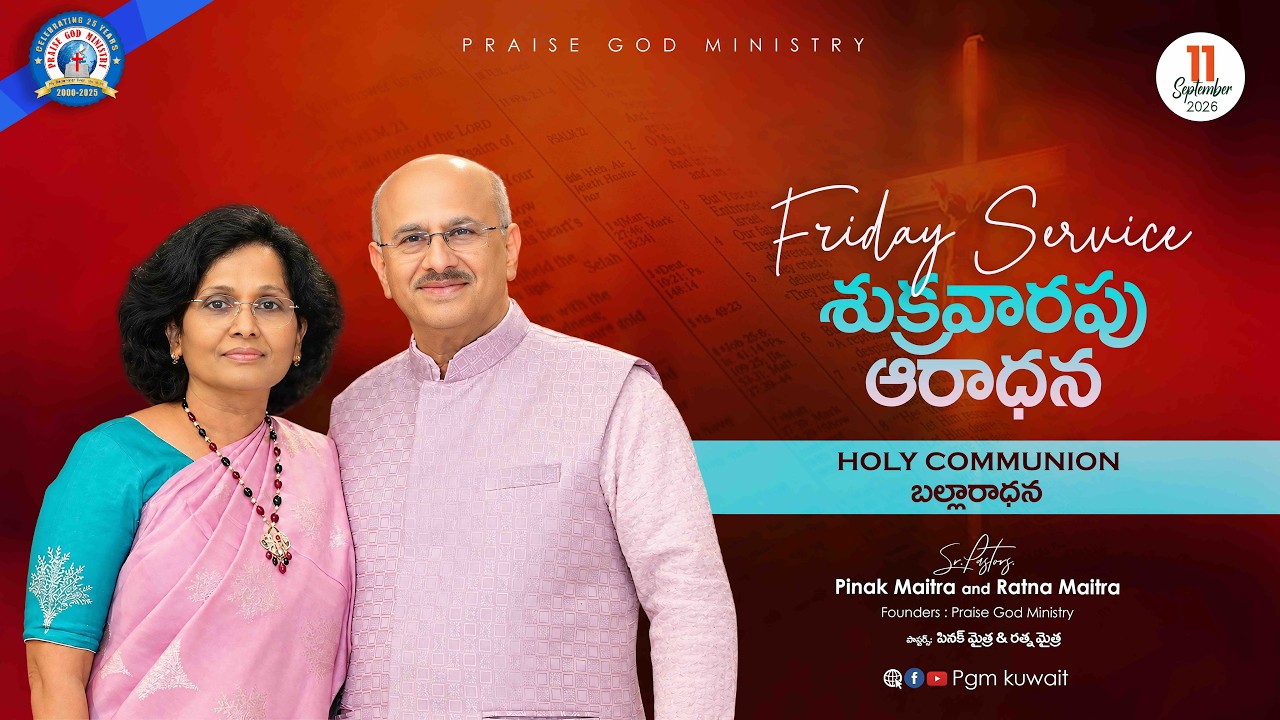
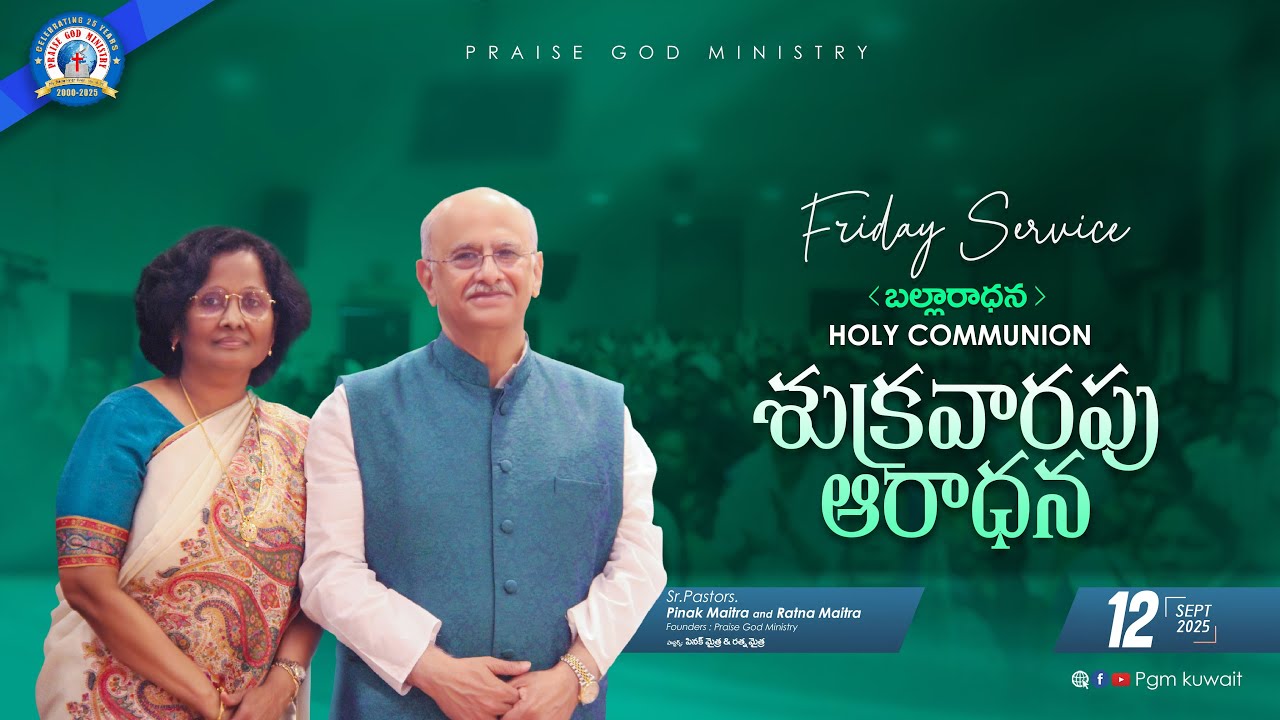
After church announcements regarding upcoming services, youth fellowships, and baptism opportunities, Senior Pastors Pinak Maitra and Ratna Maitra take the pulpit to deliver a joint message titled 'The God Who Answers with Fire.' The sermon centers on the narrative of Prophet Elijah in 1 Kings 17 and 18.
Pastor Pinak Maitra introduces Elijah's sudden appearance in scripture, standing before King Ahab to declare a multi-year drought. He highlights Elijah's deep prayer life, spiritual authority, and unwavering faith. The narrative moves to 1 Kings 18, where Elijah confronts King Ahab after three years of drought. While Ahab accuses Elijah of being the 'troubler of Israel,' Elijah boldly responds that Ahab's own idolatry and departure from God's commandments are the true cause of Israel's crisis.
Pastor Ratna Maitra translates and expands on the spiritual lessons of Mount Carmel. She emphasizes Elijah's challenge in 1 Kings 18:21: 'How long will you falter between two opinions? If the LORD is God, follow Him; but if Baal, follow him.' She urges the congregation to examine their own hearts, warning against spiritual apathy, compromise, and double-mindedness. While the prophets of Baal cried out, leaped, and cut themselves without any response, Elijah prepared the altar of the Lord according to God's instructions.
Pastor Pinak Maitra explains the symbolism of the altar. In the Old Testament, Elijah used twelve stones representing the tribes of Israel and placed wood and a bull upon it. In the New Covenant, Jesus Christ is our Chief Cornerstone, and His cross is the ultimate sacrifice. Today, our hearts are the altar, and our lives are to be presented as living sacrifices (Romans 12:1). True prayer is not merely loud crying or ritualistic performance, but a sincere, faithful relationship with God that leads to action and obedience.
When Elijah prayed a simple, sincere prayer of faith, the fire of the Lord fell and consumed the sacrifice, wood, stones, and water. The sermon concludes with an earnest invitation to believers to repair their broken altars of personal prayer, daily Bible reading, and faithful fellowship. The service closes with the Holy Communion, corporate prayers for the leadership of Kuwait and India, and a final blessing.
Scripture References
Psalm 86:6-12; 1 Kings 17:1; 1 Kings 18:1; 1 Kings 18:17-19; 1 Kings 18:21; 1 Kings 18:26-30; 1 Kings 18:31; 1 Kings 18:37-38; 1 Corinthians 2:9-16
Key Points
- Prophet Elijah operated with spiritual authority because he stood in the presence of the living God through constant prayer.
- True spiritual crisis in a nation or family stems from forsaking God's commandments and serving idols of the heart.
- Believers are challenged not to falter between two opinions but to make a decisive commitment to follow the Lord whole-heartedly.
- Ritualistic performance without genuine faith yields no divine response, as demonstrated by the prophets of Baal.
- Before God's fire can fall, the broken altar of personal prayer and worship must first be repaired.
- In the New Covenant, Jesus is the Cornerstone and His cross provides the ultimate foundation for our living sacrifice.
- Earnest, simple prayers rooted in God's covenant will be answered swiftly by the God who responds with fire.
Practical Applications
- Set aside dedicated daily time to repair your personal prayer life and Bible study habit.
- Examine your life to eliminate double-mindedness and worldly compromises that hinder spiritual growth.
- Actively participate in church fellowship, worship, and service rather than remaining passive.
- Bring your daily needs and family struggles to God in expectant, covenant-based prayer.
Prayer Points
- Pray for the Holy Spirit to revive lukewarm hearts and restore broken altars of personal prayer.
- Intercede for those suffering from sickness and financial distress that God may grant total restoration.
- Pray for church leaders and ministers to preach the uncompromised Word of God with boldness.
- Lift up the rulers, government officials, and peace of Kuwait and India in prayer.